ISS
International Space Station
The International Space Station is a large spacecraft in orbit around Earth. It serves as a home where crews of astronauts and cosmonauts live. The space station is also a unique science laboratory. Several nations worked together to build and use the space station. The space station is made of parts that were assembled in space by astronauts. It orbits Earth at an average altitude of approximately 250 miles. It travels at 17,500 mph. This means it orbits Earth every 90 minutes. NASA is using the space station to learn more about living and working in space. These lessons will make it possible to send humans farther into space than ever before.

Who Started ISS ?
Reagan directs NASA to build the ISSJanuary 25, 1984

"Just as the oceans opened up a new world for clipper ships and Yankee traders, space holds enormous potential for commerce today". President Ronald Reagan's State of the Union Address directs NASA to build an international space station within the next 10 years.
First ISS Segment Launches
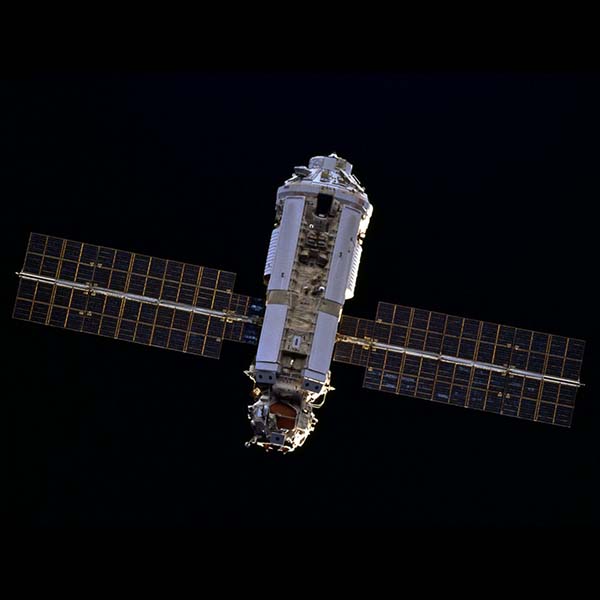
November 20, 1998The first segment of the ISS launches: The Zarya Control Module launched aboard a Russian Proton rocket from Baikonur Cosmo drome, Kazakhstan. Zarya (translates to "sunrise") supplied fuel storage, battery power and rendezvous and docking capability for Soyuz and Progress space vehicles.
First U.S.-built component launches
December 4, 1998Unity Node 1 module—the first U.S.-built component of the International Space Station— launches into orbit two weeks later during the STS-88 mission. Joining Unity with the Zarya module was the first step in the assembly of the orbiting laboratory.

First Crew to Reside on Station
November 2, 2000NASA Astronaut Bill Shepherd and cosmonauts Yuri Gidzenko and Sergei Krikalev become the first crew to reside onboard the station. Expedition 1 spent four months onboard completing tasks necessary to bring the ISS "to life" and began what is now more than 20 years of continuous human presence in space.

U.S. Lab Module Added
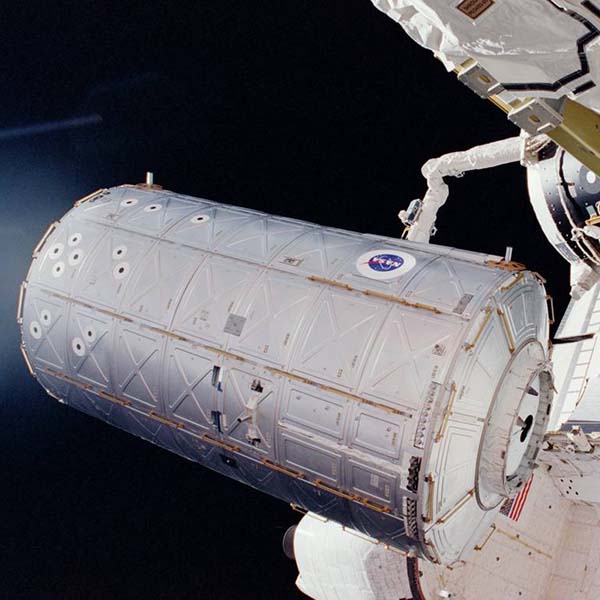
February 7, 2001Destiny, the U.S. Laboratory module, becomes part of the station. The lab—that increased onboard living space by 41%—continues to be the primary research laboratory for U.S. payloads.
U.S. Lab Module Recognized as Newest U.S. National Laboratory
December 30, 2005Congress designates the U.S. portion of the ISS as the nation's newest national laboratory to maximize its use for other U.S. government agencies and for academic and private institutions.

European Lab Joins the ISS
February 7, 2008The European Space Agency’s Columbus Laboratory becomes part of the station.

Japanese Lab Joins the ISS
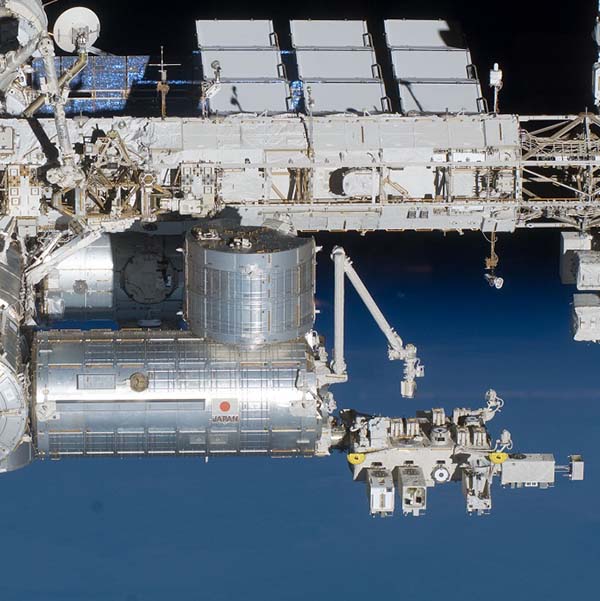
March 11, 2008The first Japanese Kibo laboratory module becomes part of the station.
ISS 10-Year Anniversary
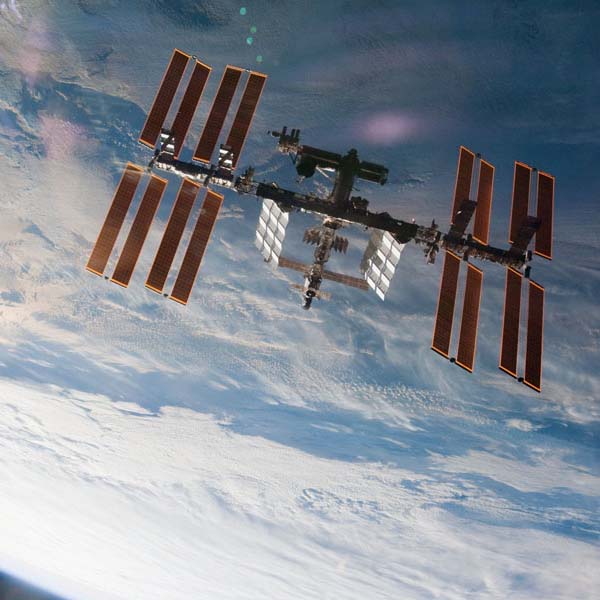
November 2, 2010The ISS celebrates its 10-year anniversary of continuous human occupation. Since Expedition 1 in the fall of 2000, 202 people had visited the station.
NASA Issues Cooperative Agreement
February 2011NASA issues a cooperative agreement notice for a management partner.
NASA Selects the ISS National Lab
July 2011NASA selects the Center for the Advancement of Science in Space to manage the ISS National Lab.

The First ISS National Lab Research Flight
September 30, 2013Proteins can be grown as crystals in space with nearly perfect three-dimensional structures useful for the development of new drugs. The ISS National Lab's protein crystal growth (PCG) series of flights began in 2013, allowing researchers to utilize the unique environment of the ISS.

How Old Is the Space Station?
The first piece of the International Space Station was launched in November 1998. A Russian rocket launched the Russian Zarya (zar EE uh) control module. About two weeks later, the space shuttle Endeavour met Zarya in orbit. The space shuttle was carrying the U.S. Unity node. The crew attached the Unity node to Zarya.
More pieces were added over the next two years before the station was ready for people to live there. The first crew arrived on November 2, 2000. People have lived on the space station ever since. More pieces have been added over time. NASA and its partners from around the world completed construction of the space station in 2011.
How Big Is the Space Station?
The space station has the volume of a five-bedroom house or two Boeing 747 jetliners. It is able to support a crew of six people, plus visitors. On Earth, the space station would weigh almost a million pounds. Measured from the edges of its solar arrays, the station covers the area of a football field including the end zones. It includes laboratory modules from the United States, Russia, Japan and Europe.

What Are the Parts of the Space Station?
Stretching out to the sides of the space station are the solar arrays. These arrays collect energy from the sun to provide electrical power. The arrays are connected to the station with a long truss. On the truss are radiators that control the space station's temperature.
Robotic arms are mounted outside the space station. The robot arms were used to help build the space station. Those arms also can move astronauts around when they go on spacewalks outside. Other arms operate science experiments.
Astronauts can go on spacewalks through airlocks that open to the outside. Docking ports allow other spacecraft to connect to the space station. New crews and visitors arrive through the ports. Astronauts fly to the space station on the Russian Soyuz. Robotic spacecraft use the docking ports to deliver supplies.


Why Is the Space Station Important?
The space station has made it possible for people to have an ongoing presence in space. Human beings have been living in space every day since the first crew arrived. The space station's laboratories allow crew members to do research that could not be done anywhere else. This scientific research benefits people on Earth. Space research is even used in everyday life. The results are products called "spinoffs." Scientists also study what happens to the body when people live in microgravity for a long time. NASA and its partners have learned how to keep a spacecraft working well. All of these lessons will be important for future space exploration.
NASA currently is working on a plan to explore other worlds. The space station is one of the first steps. NASA will use lessons learned on the space station to prepare for human missions that reach farther into space than ever before.
How To See The International Space Station ?
The space station can rival the brilliant planet Venus in brightness and appears as a bright moving light across the night sky. It can be seen from Earth without the use of a telescope by night sky observers who know when and where to look.
What Work Do Astronaut's Do Aboard The ISS?
Typically, astronauts travel to the space station via a Russian Soyuz capsule (first launched in 1967), which has long been the only spacecraft that ferries people to the ISS, since NASA’s space shuttle programme retired in 2011. However, on Mar. 3, 2020, SpaceX’s Crew Dragon capsule became the first privately-owned spacecraft to transport people to the ISS.
Once at the station, astronauts will typically spend a mission period of around 6 months conducting various science experiments and maintaining and repairing the ISS. Outside of work, astronauts will spend at least 2 hours on exercise and personal care. They also occasionally perform spacewalks, conduct media/school events for outreach, and post updates to social media. The first astronaut to tweet from space was Mike Massimino, who did it from a space shuttle in May 2009.
The ISS is a platform for long-term research for human health, which NASA bills as a key stepping stone to letting humans explore other solar system destinations such as the moon or Mars.
Human bodies change in microgravity, including alterations to muscles, bones, the cardiovascular system and the eyes; many scientific investigations are trying to characterize how severe the changes are and whether they can be reversed. Astronauts also participate in testing out products – such as an espresso machine or 3D printers – or doing biological experiments, such as on rodents or plants, which the astronauts can grow and sometimes eat in space. As the only microgravity laboratory in existence, the ISS has facilitated more than 3,600 researchers to conduct more than 2,500 experiments to date.
In 2019, NASA executives announced that the space station would open its airlocks to commercial businesses and private astronauts. This allows the private sector to test out new technologies and train astronauts under microgravity. There are also plans for Houston-based company Axiom Space to build a new commercial module on the space station to spur the growth of an off-Earth economy.

Crews are not only responsible for science, but also for maintaining the station. Sometimes, this requires that they venture on spacewalks to perform repairs. From time to time, these repairs can be urgent — such as when a part of the ammonia system fails, which has happened a couple of times. Spacewalk safety procedures were changed after a potenially deadly 2013 incident when astronaut Luca Parmitano's helmet filled with water while he was working outside the station. NASA now responds quickly to "water incursion" incidents. It also has added pads to the spacesuits to soak up the liquid, and a tube to provide an alternate breathing location should the helmet fill with water.
NASA has produced several machines to reduce the need for space walks, including the humanoid Robonaut 2. The dexterous machine joined the ISS crew back in 2011, however, after discovering a fault in the machine, Robonaut 2 was sent home to Earth in 2018 , for repairs. Also onboard the ISS are several external robotic arms that can tackle maintenance issues remotely, such as the Special Purpose Dexterous Manipulator (SPDM) - also known as Dextre - and the Canadrama2(a 57.7-foot-long robotic arm).
Records In Space
- Most consecutive days in space by an American: 340 days, which happened when Scott Kelly took part in a one-year mission to the International Space Station in 2015-16 (along with Russian cosmonaut Mikhail Kornienko). The space agencies did a comprehensive suite of experiments on the astronauts, including a "twin study" with Kelly and his Earth-bound former astronaut twin, Mark.
- Longest single spaceflight by a woman: 328 days, during American astronaut Christina Koch’s 2019-20 mission aboard the space station.
- Most total time spent in space by a woman: Again, that's Peggy Whitson, who racked up most of her 665 days in space on the ISS.
- Most women in space at once: This happened in April 2010 when women from two spaceflight missions met at the ISS. This included Tracy Caldwell Dyson (who flew on a Soyuz spacecraft for a long-duration mission) and NASA astronauts Stephanie Wilson and Dorothy Metcalf-Lindenburger and Japan's Naoko Yamazaki, who arrived aboard the space shuttle Discovery on its brief STS-131 mission.
- Biggest space gathering: 13 people, during NASA's STS-127 shuttle mission aboard Endeavour in 2009. (It's been tied a few times during later missions.)
- Longest single spacewalk: 8 hours and 56 minutes during STS-102, for an ISS construction mission in 2001. NASA astronauts Jim Voss and Susan Helms participated.
- Longest Russian spacewalk: 8 hours and 13 minutes during Expedition 54, to repair an ISS antenna. Russian astronauts Alexander Misurkin and Anton Shkaplerov participated.
New NASA Records


👏👏
ReplyDeleteInformative!
ReplyDeleteGood thoughts
ReplyDeleteInformative
ReplyDeleteGood and helpful
ReplyDelete